


Every pregnancy carries a question no parent wants to ask out loud: What if something is wrong with my baby?
For decades, Pakistani mothers had only two options to answer that question: accept uncertainty or undergo an invasive procedure that itself carried the risk of harming the pregnancy they were trying to protect.
That changed with NIPT.
Today, the NIPT test (Non-Invasive Prenatal Test), and specifically the BGI NIFTY® test available at ELC Biogen in Lahore, gives expectant parents the most accurate prenatal chromosomal screening available anywhere in the world, from a simple blood draw, as early as 10 weeks into pregnancy.
This guide tells you everything you need to know as a Pakistani parent: what the test is, who needs it, what it detects, how accurate it really is, and why Pakistan’s genetic landscape makes it especially important.
Why NIPT Matters More in Pakistan Than Almost Anywhere Else
Before explaining the test itself, it is important to understand the Pakistani context, because the genetic risk profile of Pakistani families is genuinely different from most other populations.
Pakistan has one of the highest consanguinity rates in the world.
Consanguinity means marriage between relatives, most commonly first or second cousins. Research published across Pakistani medical journals confirms that consanguineous marriage rates in Pakistan range from 55% to 65% nationally, with rates in rural areas and some provinces reaching as high as 71–78%.
What does this mean for your pregnancy?
When two people who are closely related have children together, they are more likely to carry the same recessive gene mutations. Each carrier parent passes on a copy of the faulty gene, and if the child inherits both copies, they are born with the genetic condition. This is how conditions like Beta-Thalassemia, Spinal Muscular Atrophy, cystic fibrosis, and dozens of other disorders become more common in consanguineous families.
According to researchers at Pakistan’s National Institute of Biotechnology and Genetic Engineering, approximately 29 million Pakistanis carry genetic defects attributable to close-relative marriages.
This is not a criticism of cultural practice. It is a medical reality that makes genetic awareness and prenatal screening more important for Pakistani families than for most populations in the world.
Maternal age is the second critical factor.
Studies published in the Journal of the College of Physicians and Surgeons Pakistan confirm a well-established pattern: the older a mother is at the time of conception, the higher the risk of chromosomal conditions such as Down Syndrome in the baby. Research at the Aga Khan University Hospital found a prevalence of Down Syndrome of 1 in every 550 live births in their cohort, higher than the global average of 1 in 700–1,000, underscoring the urgency of accessible prenatal screening in Pakistan.
These two factors together, high consanguinity rates and age-related chromosomal risk, make prenatal genetic screening not a luxury but a responsible part of pregnancy care in Pakistan.
What Is the NIPT Test?
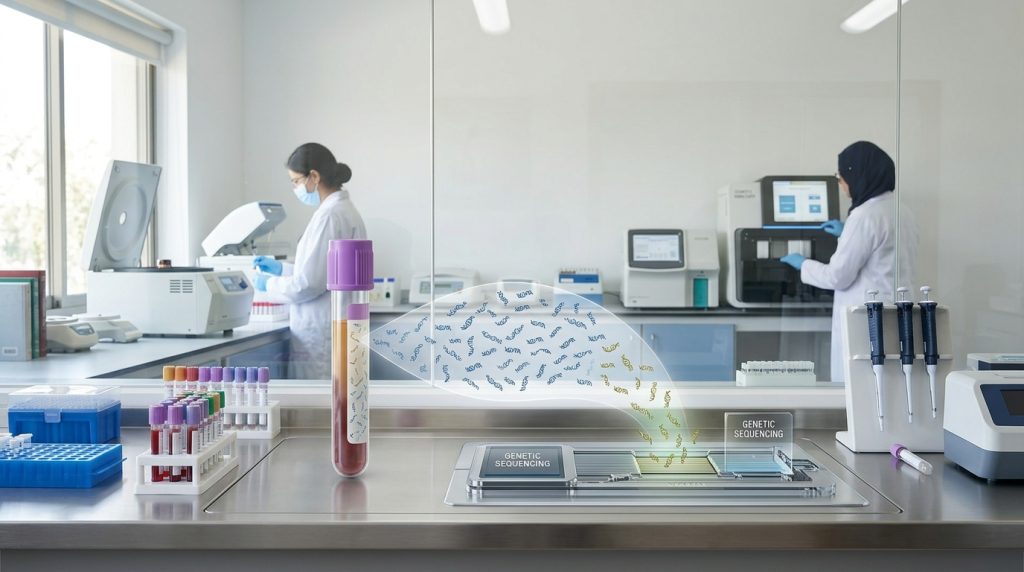
NIPT stands for Non-Invasive Prenatal Testing. It is a prenatal screening blood test that analyzes fragments of your baby’s DNA, called cell-free fetal DNA (cffDNA), that naturally circulate in the mother’s bloodstream from as early as Week 7 of pregnancy.
During pregnancy, tiny fragments of DNA from the placenta shed into the mother’s bloodstream. By Week 10, there is enough of this fetal DNA present in the blood for laboratory analysis. The NIPT test captures this DNA and uses Next-Generation Sequencing (NGS) technology to examine it for chromosomal abnormalities.
The NIFTY® Test, BGI’s Gold Standard
ELC Biogen in Lahore offers the NIFTY® test (Non-Invasive Fetal Trisomy test), developed by BGI, the world’s largest genomics organization and ELC Biogen’s authorized partner. NIFTY has been validated across more than 6 million pregnancies worldwide and is the most clinically studied NIPT test available.
As Pakistan’s only BGI-authorized genomics laboratory, ELC Biogen is the exclusive provider of the authentic NIFTY test in the country.
What Does the NIPT Test Screen For?
The NIFTY test screens for chromosomal abnormalities across the entire genome. Depending on the package selected, it covers:
Common Trisomies (Autosomal Chromosomes)
| Condition | Chromosome Affected | Prevalence | What It Means |
| Down Syndrome (Trisomy 21) | Extra chromosome 21 | 1 in 550–700 births (Pakistan) | Intellectual disability, developmental delays, cardiac defects |
| Edwards Syndrome (Trisomy 18) | Extra chromosome 18 | 1 in 6,000 births | Severe developmental abnormalities, typically fatal in infancy |
| Patau Syndrome (Trisomy 13) | Extra chromosome 13 | 1 in 6,500 births | Severe heart, brain, and organ abnormalities |
Sex Chromosome Abnormalities
| Condition | Chromosomal Pattern | Key Features |
| Turner Syndrome | 45,X (missing X chromosome) | Affects girls, short stature, heart defects, infertility |
| Klinefelter Syndrome | 47,XXY (extra X chromosome in boys) | Learning difficulties, infertility in males |
| Triple X Syndrome | 47,XXX | Usually mild, tall stature, possible learning difficulties |
| XYY Syndrome | 47,XYY | Usually mild, tall stature, possible behavioral differences |
Microdeletion and Duplication Syndromes (Advanced NIFTY Packages)
These are conditions caused by tiny missing or extra sections of chromosomes, too small to be detected by standard karyotyping but identifiable through the high-resolution analysis of NIFTY:
- DiGeorge Syndrome (22q11.2 deletion), heart defects, immune problems, learning difficulties
- Prader-Willi Syndrome, obesity, intellectual disability
- Angelman Syndrome, severe intellectual disability, seizures
- 1p36 Deletion Syndrome, intellectual disability, heart defects
- Wolf-Hirschhorn Syndrome (4p deletion), growth delays, seizures
- And 80+ additional microdeletion/duplication conditions
Optional Add-Ons
- Fetal sex determination: parents can optionally find out the baby’s gender
- Rare autosomal trisomies: Trisomy 9, 16, and 22 (not commonly included in conventional screening)
How Accurate Is the NIPT Test? The Real Numbers
One of the most important things Pakistani parents want to know is: How sure can I be of this result?
NIFTY’s published clinical accuracy figures:
| Condition | Sensitivity (Detection Rate) | Specificity | False Positive Rate |
| Down Syndrome (Trisomy 21) | >99.5% | >99.9% | <0.1% |
| Edwards Syndrome (Trisomy 18) | >99% | >99.9% | <0.1% |
| Patau Syndrome (Trisomy 13) | >99% | >99.9% | <0.1% |
| Sex chromosome abnormalities | >95% | >99.5% | Variable |
| Microdeletions (Advanced) | >90% | >99% | Varies by condition |
Published in: Plos One, BMC Pregnancy and Childbirth, and multiple peer-reviewed journals based on BGI NIFTY clinical trials.
What sensitivity >99.5% means in plain language: If 1,000 pregnant women carrying a baby with Down Syndrome took the NIFTY test, 995+ of them would receive a high-risk result that correctly identified the condition.
An important clarification: NIPT is a screening test, not a diagnostic test. A high-risk result means the probability of the condition is significantly elevated; it does not mean the diagnosis is confirmed. A positive (high-risk) result should always be followed by confirmatory diagnostic testing such as amniocentesis.
However, a low-risk NIPT result is highly reliable; approximately 97–98% of all NIPT results come back low risk, and the vast majority of those pregnancies are unaffected by the screened conditions.
NIPT vs. Conventional Screening vs. Amniocentesis
The table below gives you an honest, side-by-side comparison of the options available to Pakistani mothers:
| Feature | Nuchal Translucency Scan | Triple/Quad Screen | NIFTY NIPT | Amniocentesis |
| What it is | Ultrasound measurement | Blood hormone test | NGS blood test | Needle into amniotic sac |
| Type | Screening | Screening | Screening | Diagnostic |
| Available from | Week 11–14 | Week 15–20 | Week 10 | Week 15–20 |
| Down Syndrome Detection | 75–80% | 75–85% | >99.5% | ~99% |
| Risk to Baby | None | None | None | 1 in 400–900 miscarriage risk |
| Result Time | Same day | 1–2 weeks | 10–14 days | 2–3 weeks |
| Diagnoses confirmed? | No | No | No | Yes |
| Examines entire genome? | No | No | Yes (full genome) | Yes (karyotype only) |
The key insight: NIPT sits in the most practical position, earlier than amniocentesis, far more accurate than conventional blood screens, and with zero risk to the baby. For Pakistani families who want maximum information with minimum risk, the NIPT pathway is NIPT first amniocentesis only if NIPT is high risk.
Who Should Get the NIPT Test in Pakistan?
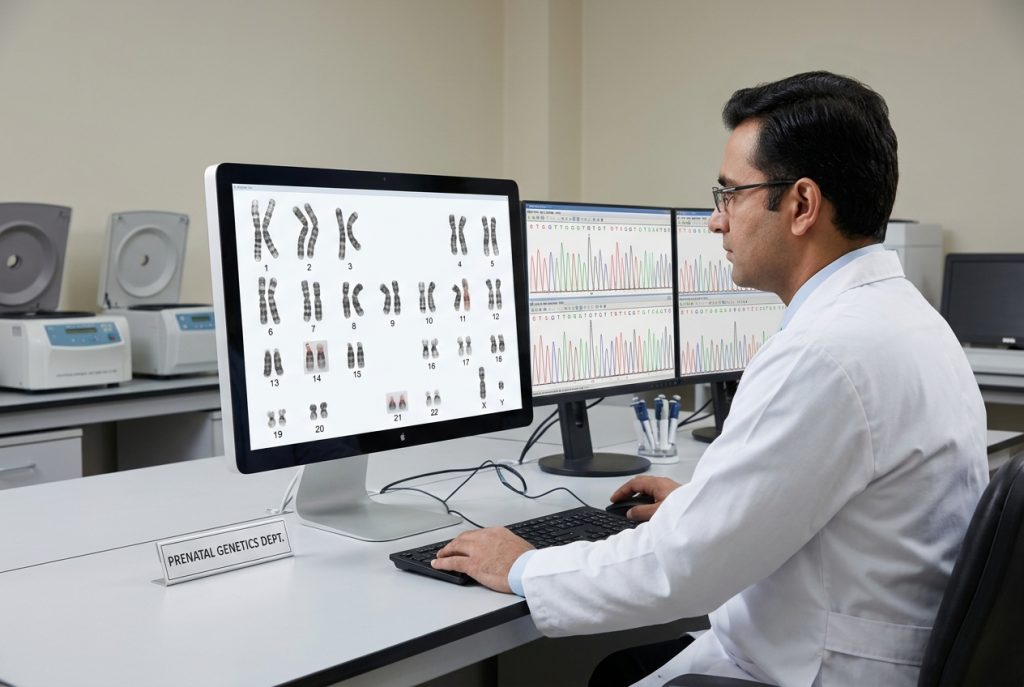
Strongly Recommended
- All women aged 35 and above. Research from Pakistani academic hospitals consistently confirms that the risk of chromosomal conditions, particularly Down Syndrome, increases significantly with maternal age. Women above 35 are classified as “advanced maternal age” and should be offered NIPT as a standard of care.
- Women with abnormal first-trimester ultrasound. If your NT scan shows increased nuchal translucency (typically above 3.5 mm) or other structural concerns, NIPT provides essential additional information.
- Pregnancies with a previous chromosomal condition. If a prior pregnancy was affected by Down Syndrome, Edwards Syndrome, or another chromosomal condition, your risk in subsequent pregnancies is elevated.
- Families with a history of chromosomal disorders. If a family member (sibling, parent, or close relative) has a chromosomal condition, NIPT adds an important layer of screening.
- IVF pregnancies. The chromosomal dynamics of IVF pregnancies, including the embryo selection process, make NIPT a valuable complementary screen alongside our reproductive health services.
- Women who have experienced recurrent miscarriages. Chromosomal abnormalities in the embryo account for approximately 50–60% of first-trimester miscarriages. NIPT in future pregnancies can provide important information.
Also Appropriate For
- Consanguineous couples (cousin marriages). While NIPT primarily screens chromosomal conditions rather than single-gene recessive disorders (for which carrier testing and PGT-A are more appropriate), it does screen for microdeletion syndromes that are more prevalent in consanguineous families.
- Any mother who wants early, high-accuracy reassurance. NIPT is not exclusively for high-risk pregnancies. Many low-risk women choose it because the peace of mind it provides, or the early warning it offers, is clinically and emotionally valuable.
How the NIFTY Test Works at ELC Biogen, Step by Step
Step 1: Pre-Test Genetic Counseling (30–45 minutes)
Before any test is ordered, you will meet with our genetic counseling team. This session covers:
- Your personal and family medical history
- The conditions being screened for
- What high-risk and low-risk results mean in practical terms
- What steps follow a high-risk result
- Any questions you have; no question is too basic
This is not a formality. Informed consent is the foundation of responsible genetic testing.
Step 2: Blood Sample Collection (5 minutes)
A trained phlebotomist collects approximately 10 ml of blood from your arm, the same as a routine blood draw. No needles near the baby. No risk to the pregnancy. You can eat and drink normally before the test.
Step 3: Laboratory Analysis (10–14 working days)
Your sample undergoes a rigorous, multi-stage analytical process:
- Cell-free fetal DNA extraction: fetal DNA fragments are isolated from your blood
- DNBSEQ™ Next-Generation Sequencing: BGI’s proprietary high-accuracy sequencing technology sequences all chromosomal regions
- Bioinformatics analysis: advanced algorithms calculate the risk score for each screened condition
- Three-stage verification; results go through automated software review, bioinformatics expert review, and final interpretation by a certified clinical geneticist
Step 4: Result Delivery
Your report is delivered as a clear, professionally formatted document. Each condition is reported as either:
- Low Risk: The probability of this condition is very low based on your test
- High Risk: The probability of this condition is elevated; confirmatory testing is recommended
Step 5: Post-Test Counseling
- Low risk result: Your counselor explains what this means for your pregnancy and any follow-up monitoring needed.
- High-risk result: Our team immediately guides you through the next steps, typically a referral for confirmatory amniocentesis and consultation with a maternal-fetal medicine specialist. You are not alone in this process.
The Pakistan-Specific Risk Reality: What Your Doctor May Not Have Told You
Most Pakistani obstetricians still follow older antenatal care protocols that rely on maternal age alone, nuchal translucency ultrasound, and the triple/quad screen blood test. These are meaningful tools, but they have significant limitations.
Consider these facts:
- A 1996 study at Aga Khan University Hospital, Karachi, found the prevalence of Down Syndrome in their birth cohort was 1 in 550 live births, substantially higher than the global average of 1 in 700–1,000.
- A study published in the Pakistan Armed Forces Medical Journal examining chromosomal abnormalities found that 85 out of 128 Down Syndrome cases in their cohort were the product of consanguineous marriages, and the mean maternal age was only 29.9 years. This means Down syndrome is not only a risk for older mothers in Pakistan.
- Research from multiple Pakistani institutions confirms that the risk of chromosomal abnormalities begins increasing measurably from age 30, not 35 as commonly assumed.
What this tells us: In Pakistan, the standard recommendation of “wait until 35 to screen” is outdated. The consanguinity factor, combined with earlier-than-expected maternal age risk curves, makes NIPT a consideration for any Pakistani mother who wants complete prenatal information, not just those in the conventional “high risk” category.
ELC Biogen: Pakistan’s Only BGI-Authorized NIFTY Laboratory
ELC Biogen was established with a singular purpose: to bring world-class genomic diagnostics to Pakistani patients who have historically had to travel abroad or go without.
We are Pakistan’s first and only authorized partner of BGI, the global leader in genomics. This means the NIFTY test you receive at ELC Biogen is not a local adaptation or a similar product; it is the same test, the same technology, and the same global standard of analysis used in BGI-affiliated centers worldwide.
Our team includes clinical geneticists, genetic counselors, and molecular biologists trained in Pakistan and internationally. Every result is interpreted by qualified professionals, not algorithms alone.
We understand the Pakistani family. We understand the cultural context of consanguinity, the pressure on expectant mothers, and the gap in prenatal genetic awareness in our healthcare system. Our role is not only to run tests; it is to explain results clearly, support families through difficult decisions, and ensure that every patient leaves knowing exactly what their result means.
Book Your NIPT Consultation at ELC Biogen
The NIFTY NIPT test is available now in Lahore. If you are pregnant, planning a pregnancy, or an obstetrician looking to refer patients for advanced prenatal screening, get in touch with us; we are ready to assist.
📞 Call or WhatsApp: +92 331 6666611 📧 Email: info@elcbiogen.com 📍 Location: 48-A, 1st Floor, Airline Society, Khayaban-e-Jinnah, Lahore, Pakistan 🕐 Hours: Monday – Sunday, 8:00 AM – 11:00 PM
Frequently Asked Questions About NIPT in Pakistan
Q: Is NIPT available in Pakistan, and is it reliable?
Yes. ELC Biogen in Lahore offers the NIFTY® NIPT test, developed by BGI, the world’s most tested NIPT platform with over 6 million validated pregnancies. As Pakistan’s only BGI-authorized laboratory, ELC Biogen uses the same technology and quality standards applied globally.
Q: At how many weeks can I take the NIPT test?
The NIFTY test can be performed from Week 10 of pregnancy onwards. There is no upper gestational age limit, though testing in the first trimester (Weeks 10–13) gives you the most time to act on results if needed.
Q: Does NIPT detect all chromosomal conditions?
NIPT is comprehensive for the conditions it screens, but it does not detect every possible birth defect or genetic condition. It does not screen for neural tube defects (for which maternal serum AFP is used), most single-gene disorders (for which targeted carrier testing or WES/WGS is appropriate), or structural anomalies (detected by ultrasound). Your counselor will help you understand exactly what is and is not covered.
Q: My doctor said NIPT has a high false positive rate, is that true?
For the conditions NIPT is designed to screen, primarily the trisomies, the NIFTY test’s false positive rate is below 0.1% for Down Syndrome and similarly low for other major trisomies. The misunderstanding often arises from mixing NIPT data with older screening methods. The NIFTY test is among the most specific screening tests in clinical medicine.
Q: I am 27 years old. Do I still need NIPT?
NIPT is recommended for all pregnant women, not only those above 35. Chromosomal conditions can occur at any maternal age. Research from Pakistani hospitals shows that consanguinity in the family background is a meaningful additional risk factor regardless of age. NIPT is the only prenatal screen that offers >99% accuracy for Down Syndrome detection.
Q: What happens if my NIPT result comes back high risk?
A high-risk result does not mean your baby definitely has the condition; it means the probability is elevated and confirmatory testing is recommended. ELC Biogen’s genetic counseling team will immediately schedule a consultation to explain your result and guide you through next steps, which typically include amniocentesis for confirmation. We support you throughout this process.
Q: Can I take the NIPT test if I am pregnant through IVF?
Yes. NIFTY is validated for IVF pregnancies, including singleton and twin pregnancies conceived through assisted reproduction. In fact, NIPT is especially valuable for IVF pregnancies because the embryo selection process and the profile of patients undergoing IVF make chromosomal screening clinically important.
Q: Can I get NIPT done if I live outside Lahore?
Yes. ELC Biogen accepts samples from patients across Pakistan. Please contact us to arrange sample collection logistics. In many cases, a local phlebotomist can collect your sample using our prescribed kit, which is then sent to our Lahore laboratory.
Q: Is NIPT a diagnostic test or a screening test?
NIPT is a screening test, not a diagnostic test. A low-risk result is highly reliable and provides strong reassurance. A high-risk result requires confirmation through a diagnostic test (amniocentesis or CVS) before any medical decisions are made. No screening test, including NIPT, replaces diagnostic testing for confirmed decisions.
Q: Can NIPT tell me the sex of my baby?
Yes, gender determination is available as an optional addition to all NIFTY packages. Please inform your counselor during your pre-test consultation if you would like this included.